
Winter Fire Safety at Home - Smoke Alarms, Exits and Quick Checks
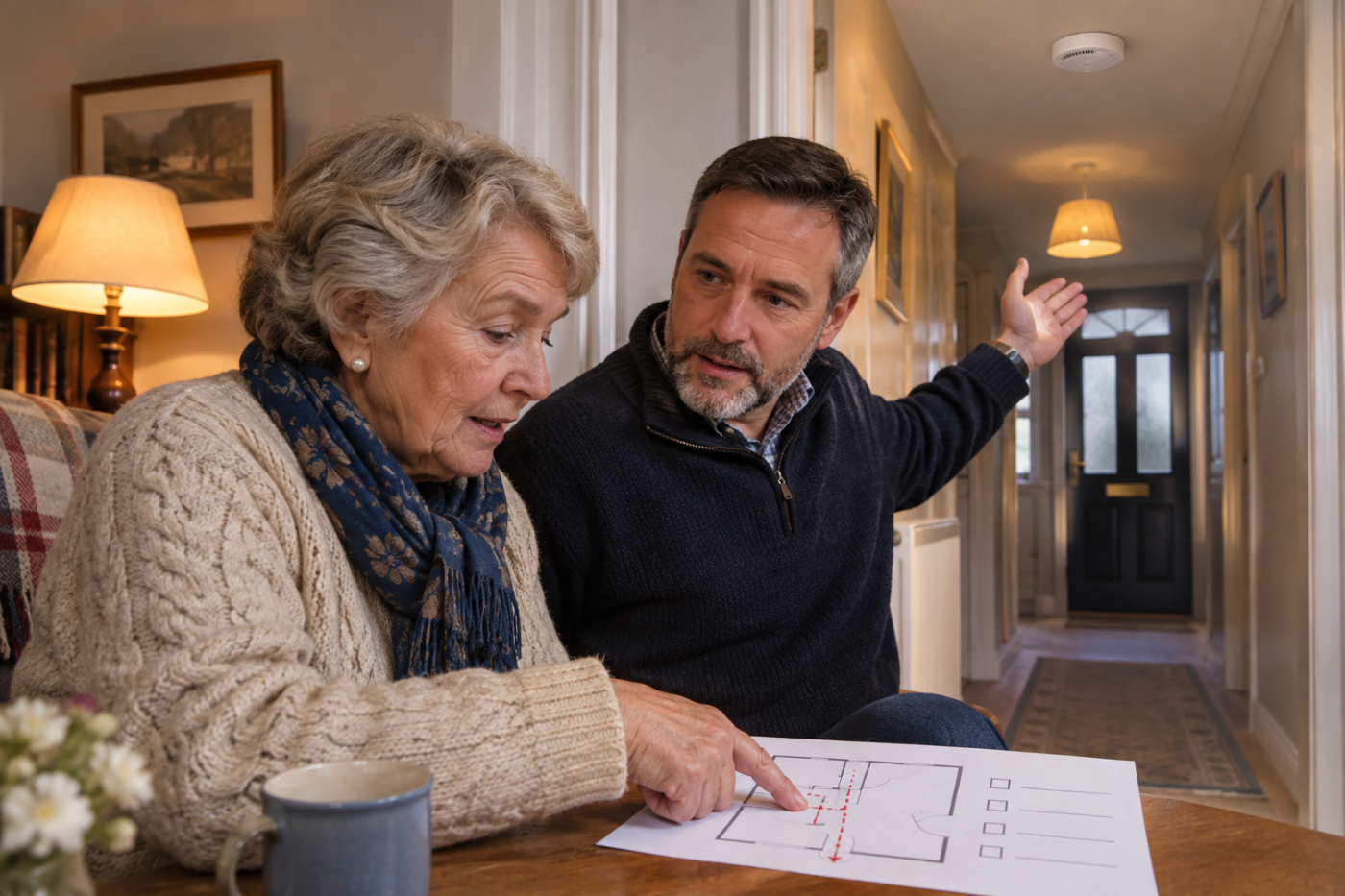
For older persons and family carers, winter fire safety starts with working alarms and an agreed escape plan. Check that you can hear or notice an alarm from your sleeping area and use an exit. If you are helping someone else, review the arrangements with their agreement and account for their mobility and hearing needs.
Begin with four quick checks:
The smoke alarm works when tested, along with any visual or vibrating alert used in the sleeping area.
The route from the bedroom to an outside door is clear.
Doors and windows along the escape route open easily.
Heaters, plugs, and leads are in good order, with nothing resting against them.
Check How You Would Leave the Home
Review the route from your sleeping area to an outside door in daylight and under your usual evening lighting. Use your usual mobility aid and ask for help if you need it. If you are helping someone else, agree the check with them and notice any barriers together.
If you live in an apartment building, ask the landlord or building manager about the building's evacuation plan. Discuss any mobility or hearing needs with the local fire service.
Keep doorways clear and identify a second exit where the layout allows. Check that doors and windows open without force and everyone knows where any necessary keys are kept. Practical falls prevention at home, including clearing walkways and securing rugs, can help keep routes accessible.
Agree on an Escape Plan Together
Fire Ireland's 2026 National Fire Safety Week campaign highlighted everyday hazards, working alarms and emergency exits. Use that advice to agree an escape plan together:
Which exit the person can use most comfortably, including at night.
What the alternative route is if the first is blocked.
How someone who needs assistance would respond if they were alone.
How everyone can contact the fire brigade quickly.
Where people will meet once safely outside.
Account for Mobility and Hearing Needs
People with reduced mobility may need a wider, step-free route for a walking frame or wheelchair. Allow for the person's usual pace and consider how the plan works when they first wake. A move to a downstairs bedroom can change the most suitable exit.
A standard audible alarm may not wake someone who removes hearing aids at night. Compatible systems with flashing lights or vibrating pads can provide alternative alerts.
Ask the local fire service about suitable options and follow the manufacturer's installation and testing instructions. The person living there should lead decisions about arrangements that affect their home and routine.
Plan for a Difficult Exit
Discuss with the local fire service how you would respond if you needed help to leave, including times when you are alone. Ask about accessible alarm signals and actions if you cannot get out. Avoid relying on a relative, neighbour or visiting worker arriving after the alarm.
Day-to-day mobility support can help some people move around their home as part of an agreed care plan. It does not provide emergency evacuation cover or replace advice from the fire service.
What to Do if an Alarm Sounds
If You Can Leave Safely
Fire Ireland's home evacuation guidance recommends planning the simplest usable route and an alternative. If an alarm sounds and you can leave safely, use the safest available exit. Keep below smoke if you can and close doors behind you if safe.
Once outside, stay out and call 112 or 999. Tell the fire brigade if anyone is still inside. Never go back for belongings or pets.
If Smoke or Fire Blocks Your Exit
If smoke or fire blocks escape, move to a room away from the fire if possible and close the door. If you can do so safely, use towels or sheets to block gaps around it.
Call 112 or 999, say you are trapped and give your address, Eircode if known, and location in the home. Explain any mobility or communication needs.
Only open a window if safe and close it if smoke gets worse. Attract attention, stay low if smoke enters and follow the fire brigade's instructions. Avoid unsafe exits from a height and attempts to fight the fire.
Test and Maintain Smoke Alarms
Fire Ireland's smoke alarm installation and maintenance guidance recommends at least one smoke alarm on every level. For fuller protection, consider alarms in bedrooms, living rooms, hallways and landings, with a heat alarm in the kitchen.
Fit and position alarms according to the manufacturer's instructions. Check how well they can be heard from sleeping areas with doors closed.
Agree a Weekly Testing Routine
Test smoke alarms once a week, following the manufacturer's instructions. Agree who will help if you cannot reach the alarm safely. Avoid standing on furniture to test it.
Press the alarm's test button as instructed, then check any connected visual or vibrating alerts according to their instructions. Confirm that the appropriate alert is noticeable from the main sleeping area.
Listen for a repeated chirp that may signal a low battery, then follow the instructions for that alarm type.
Check the replacement date on each unit and replace alarms when required.
Remove dust from the casing gently, following the manufacturer's maintenance advice.
Smoke, heat and carbon monoxide (CO) alarms detect different hazards. A CO alarm cannot replace smoke or heat detection. Have mains-wired alarm installation or changes to fixed wiring carried out by a Registered Electrical Contractor (REC).
Check Cooking, Heaters, and Electrical Leads
A brief evening check can help identify hazards before bedtime. Fire Ireland's home fire-prevention advice highlights unattended cooking, overloaded sockets, and devices charging on soft furnishings as avoidable risks. Include these checks in the household routine:
Stay in the kitchen while cooking on the hob or under the grill.
Keep curtains, clothes, blankets, and furniture well away from heaters, open fires, and stoves.
Use a suitable fireguard in front of an open fire and extinguish candles before bed.
Switch off portable heaters and make sure open fires are safely out before bed.
Arrange for chimneys to be swept at least once a year and have appliances serviced by qualified professionals.
Flag frayed leads, warm plugs, and overloaded sockets. Stop using faulty equipment and arrange a professional check.
Never charge a phone or other device on a bed, sofa, or beneath a pillow.
Avoid drying laundry directly on or beside heaters, and close internal doors at night to help limit the spread of smoke.
Family carers and Home Support Workers may notice hazards during agreed visits. Raise routine concerns with the person and, with their agreement, the appropriate care or technical professional. Electrical repairs, chimney sweeping and appliance servicing belong with qualified professionals.
Ask the Local Fire Service About Support
Contact your local fire service for advice on alarms and evacuation planning. Ask about the Community Smoke Alarm Scheme and any home-visit support available locally. Eligibility and services vary, so confirm the options for your household.
Before contacting them, note any questions about alarm positions, visual or vibrating alerts, and planning for a person who may need help to leave. Explain the home layout and any difficulties with doors, stairs, or sleeping arrangements. The fire service can advise on appropriate next steps for that household.
Keep the Agreed Plan Accessible
With the person's agreement, write the escape plan in plain language and agree who maintains it. Include the main and alternative exits, actions if both are blocked, how to call for help and the meeting place. Keep the address and Eircode accessible to the person and agreed supporters.
The household plan supplements any formal care plan and professional care record. Paid care staff follow their employer's recording procedures.
Share the plan with family members or trusted neighbours only with the person's agreement. Review it after changes in mobility, sleeping arrangements or the layout, and agree when to check it again. Continue the separate weekly smoke-alarm test.
Discuss Everyday Homecare Support
At Comfort Keepers Ireland, we provide homecare delivered by trained Home Support Workers with oversight from experienced Clinical Nurse Managers. Our personal care support follows an agreed person-centred care plan.
We share routine concerns with the person and, with their agreement, their family or relevant care professional. Homecare cannot replace a fire-service assessment, specialist installation advice or emergency evacuation support.
For advice about fire risks, alarms or evacuation, contact your local fire service. To discuss private homecare for yourself or someone you support, speak with Comfort Keepers Ireland.
